Why Is My Water Pressure Low, and What Fixes It?
Low water pressure at one faucet and low pressure in the whole house have different causes, and this guide helps you find yours.
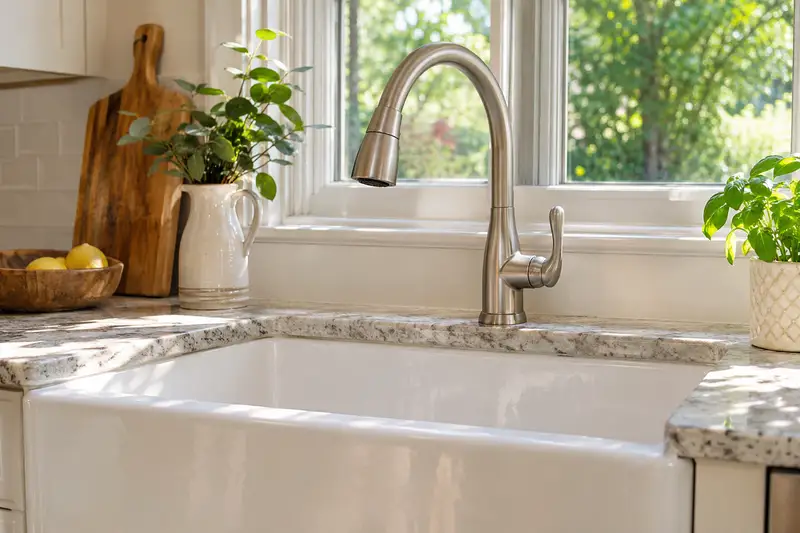
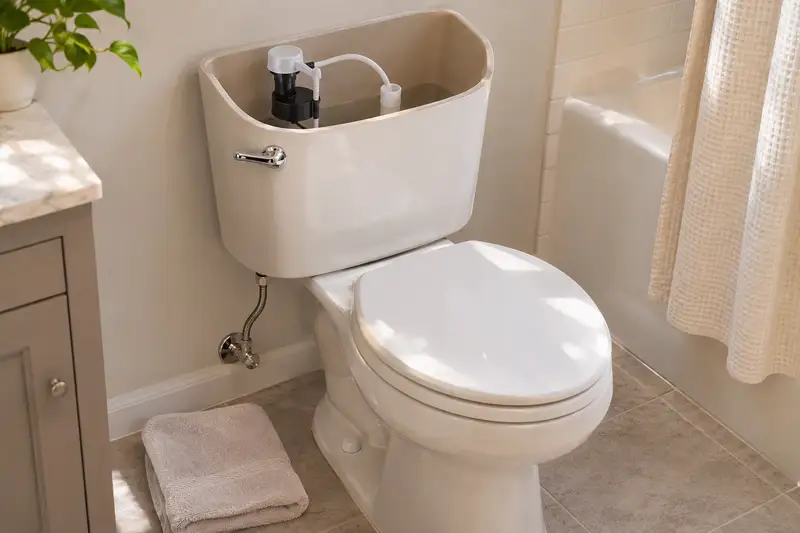
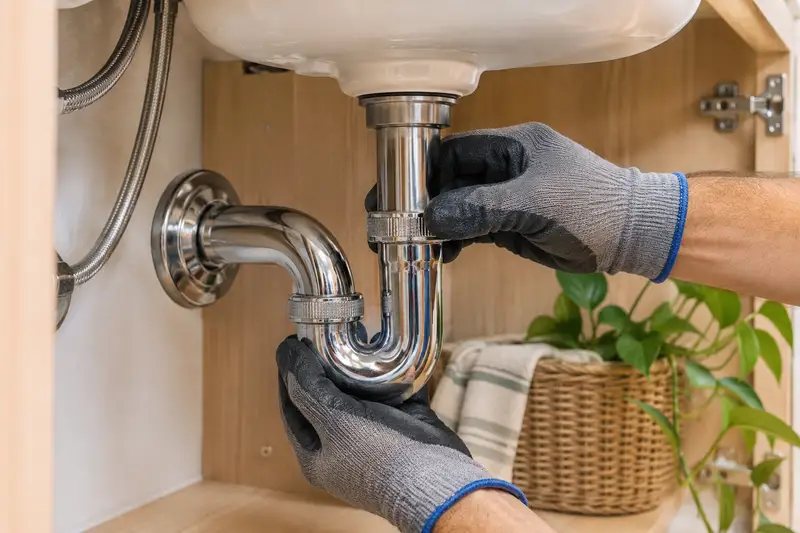
Is the low water pressure at one faucet or at every faucet?
If you are wondering why your water pressure is low, the first question is where. Is it one fixture, or the whole house? Weak flow at the kitchen faucet and weak flow everywhere have very different causes.
Low pressure at one fixture
- A clogged aerator or shower head.
- A worn cartridge in that faucet.
- A partly closed valve under that sink.
- A kinked supply hose.
Low pressure in the whole house
- A partly closed main water valve.
- A failing pressure regulator.
- Water leaking from a hidden pipe.
- Old pipes narrowed by corrosion.
How to fix low water pressure at one fixture
Clean the aerator
Unscrew the tip of the faucet, rinse the screen and soak it in vinegar if it is crusted.
Clean the shower head
Soak it in vinegar to dissolve the mineral buildup in the holes.
Check the valves
Make sure both valves under the sink are fully open.
Check the supply hose
A kinked or crushed hose behind the fixture restricts the flow.
If the flow is still weak after all four checks, a worn cartridge or valve inside the fixture is the next likely cause. Our page on faucet and fixture repair covers that repair.
Why is my water pressure low in the whole house?
The main water valve
A valve left partly closed after a repair is a common problem and an easy fix.
The pressure regulator
This bell shaped valve near the main water valve keeps the pressure steady, and it can fail with age.
A hidden leak
Water leaking from a pipe lowers the pressure at every fixture.
Corroded pipes
Older galvanized pipe narrows on the inside until the flow drops.
A clogged filter
A whole house filter or water softener that needs servicing restricts the flow.
The water supply
Occasionally, the problem is on the street side of the meter.
A five minute test to find the cause
Check a few fixtures around the house
Test several fixtures
Run the kitchen, a bathroom sink, a shower and an outdoor faucet in turn.
Compare hot and cold
Try each side separately at a mixer faucet.
Check the main water valve
Make sure it is fully open, because a partly closed valve slows every faucet.
Check the water meter
With all the water off, a moving leak indicator means there is a leak.
Ask your neighbors
If their pressure has dropped too, the cause may be in the water supply.
Write down what you find. Knowing whether the problem is at one fixture, on the hot or cold side or in the whole house tells the plumber where to start.
Low hot water pressure with normal cold water
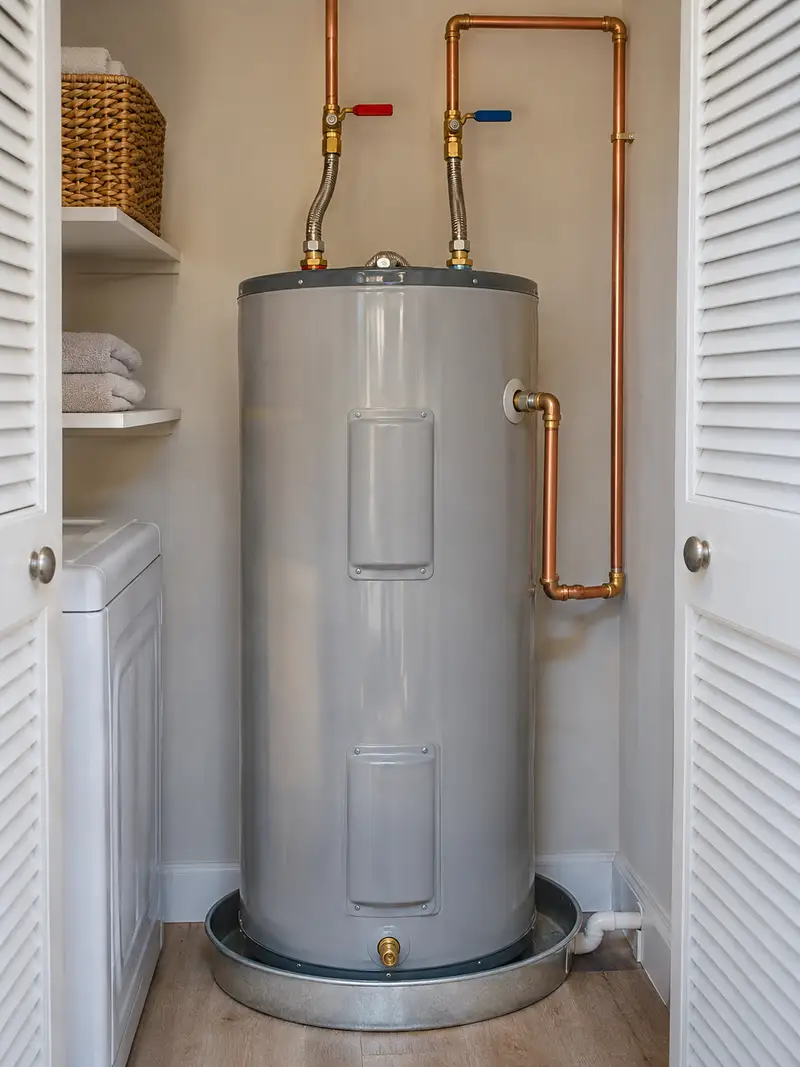
If only the hot water is weak, the cause is usually at the water heater. Sediment can build up in the tank or its outlet, a valve on the hot water pipe may be partly closed, or mineral buildup may be restricting a tankless water heater.
- Check that the valves at the water heater are fully open.
- Drain sediment from the tank if a year or more has passed since the last flush.
- On a tankless water heater, check the inlet filter.
Our page on water heater repair explains sediment and flushing.
Signs your water pressure is too high
People notice low water pressure straight away. High pressure often goes unnoticed, but over the years it does much more damage to the plumbing. Banging pipes, running toilets, dripping faucets and appliance hoses that wear out early can all be signs that the pressure is too high.
A pressure gauge screwed onto an outdoor faucet gives a quick reading, and a plumber can adjust or replace the regulator if it is set too high or has failed.
What a water pressure regulator does
Many homes have a pressure regulator, a bell shaped valve near where the main water line enters the house. It lowers the pressure coming from the street to a steady level the plumbing can handle.
When a regulator wears out, it can fail in either direction. Some let the pressure drop until every faucet is weak. Others let it rise, which causes banging pipes and running toilets. Either way, adjusting or replacing the regulator usually restores normal pressure.
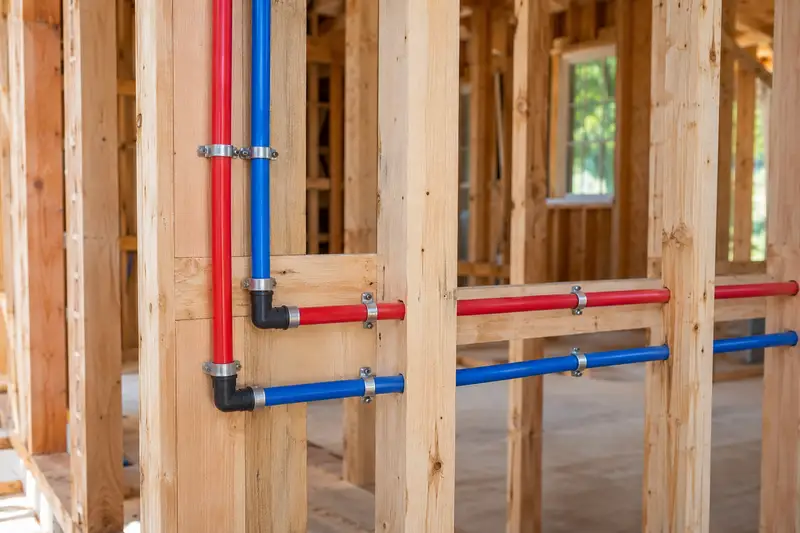
How old pipes slowly reduce water pressure
Some pressure problems start suddenly, and others develop over years. Galvanized steel pipe, which is common in older homes, rusts from the inside, and the opening slowly narrows until the flow at every faucet is much weaker than it used to be.
Rusty or brown water
Especially from a faucet that has not been used for a while.
Weak flow upstairs
Or at the fixtures farthest from the main water valve.
Pressure that gets worse over time
A slow decline rather than a sudden drop.
Gray metal pipe
Threaded steel pipe you can see under sinks or at the water heater.
Once the pipes are corroded, the usual fix is to replace the worst sections or repipe the house.
What a plumber checks for low water pressure
Pressure readings
At the main water valve and at fixtures, to see where the pressure drops.
The regulator
Whether it holds a steady pressure or has failed.
Leaks
Using the water meter test and, if needed, leak detection.
The condition of the pipes
Signs of corrosion that narrow the pipes.
The plumber explains every reading and what each repair would involve before any work starts.
Low water pressure fixes, from small to large
| Cause | Typical fix |
|---|---|
| Clogged aerator or shower head | Cleaning or replacing it |
| Partly closed valve | Opening it fully |
| Failed regulator | Adjusting or replacing it |
| Clogged filter | A new cartridge or a service visit |
| Hidden leak | Finding and repairing it |
| Corroded pipes | Replacing the affected pipes |
Water pressure questions
One faucet runs weakly while the rest are fine. What is wrong with it?
Usually a clogged aerator, a worn cartridge or a valve under the sink that is not fully open.
What causes low water pressure in the whole house?
The usual causes are a main water valve left partly closed, a worn out pressure regulator, a hidden leak or old pipe narrowed by rust.
What is a water pressure regulator?
A valve near the main water valve that keeps the water pressure in the house steady. It can fail with age.
Can a leak lower water pressure?
Yes. Any water leaking out of the pipes never reaches your faucets. Watching the water meter with all the water off shows whether that is happening.
Why is the pressure low on the hot side only?
Check the water heater first. Sediment in the tank outlet, a valve on the hot water pipe left partly closed or mineral buildup in a tankless unit are the usual reasons.
Can high pressure damage plumbing?
Yes. It strains joints, wears out faucet parts and shortens the life of appliance hoses.
How do I test my water pressure?
A simple gauge screwed onto an outdoor faucet gives a reading. A plumber can test it too.
Why did my water pressure drop after a repair?
A valve may not have been fully reopened, or debris may be stuck in an aerator. Check both first.
Do old pipes cause low pressure?
Galvanized steel pipes can narrow inside with corrosion, which slowly reduces flow.
Can a water softener reduce water pressure?
Yes. A clogged filter or a softener that needs servicing can restrict the flow.
Why does my shower pressure change when someone flushes?
Some drop is normal when another fixture opens. A big drop can point to undersized or narrowed pipes, or a pressure balancing valve that needs attention.
Is low pressure an emergency?
Usually not, unless it comes with no water at all or signs of a leak.
Why is my water pressure low only in the morning?
Many households use water at the same time in the morning, and the supply pressure can dip. If it is weak all day, the cause is more likely inside the house.
Can a water heater cause low pressure on the cold water?
Not usually. A water heater problem shows up on the hot water side. If the cold water is weak too, the cause is somewhere else.
Is it normal for an outdoor faucet to have stronger pressure?
Often, yes. Outdoor faucets may connect before the regulator or the water softener, so they can run stronger than indoor fixtures.
Does a clogged aerator affect both hot and cold water?
Yes, because both pass through it. If only the hot or only the cold is weak, the aerator is not the cause.
Why did my water pressure drop after work on the street?
Debris loosened by the work can get stuck in aerators and valves. Clean the aerators first, and if every faucet is still weak, contact the water provider.
Can a leak in the yard lower the water pressure indoors?
Yes. A break in the buried water line lets water escape before it reaches the house.
How often should aerators be cleaned?
Every few months is a good habit, more often if your water leaves a lot of white crust.
Will a new shower head fix weak water flow?
If the old shower head is clogged with minerals, cleaning or replacing it often helps. If every fixture is weak, the shower head is not the cause.