Slab Leak Symptoms to Watch For
A leak in a pipe under your concrete floor is easy to miss, and this guide lists the signs to look for.
Why slab leak symptoms are easy to miss
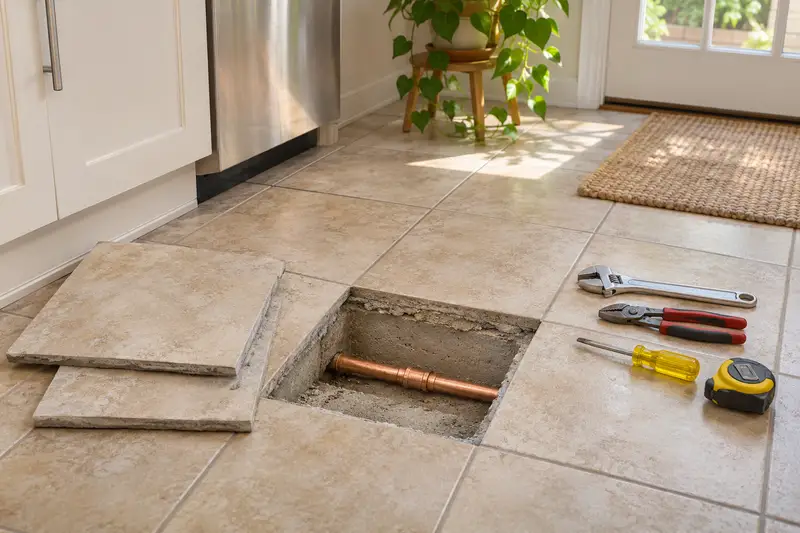
In many Lubbock houses the floor is a concrete slab, and copper or plastic water pipes run in it or under it. When one of those pipes develops a small hole, the water soaks into the ground instead of spreading across your floor. That is why slab leak symptoms are often hard to notice.
Finding a slab leak early matters. Months of water under the house can lift flooring, move the soil the slab sits on and waste a great deal of water.
Common slab leak symptoms
Any one of these signs could have another explanation. If you notice two or three at once, have it checked.
A warm spot on the floor
Hot water leaking from a pipe under the slab can make one area of the floor feel warmer.
The sound of running water
When the house is quiet and every faucet is off, you can hear water moving under the floor.
A water meter that keeps moving
The small leak indicator on the meter turns while no water is being used.
Higher water use
Your water use goes up even though your routine has not changed.
Damp carpet
Carpet or pad feels wet from underneath, and no spill explains it.
New cracks
Tile, grout or drywall starts to crack where it was sound before.
Lower water pressure
Some of the water leaks out before it reaches your faucets.
A musty smell
A damp smell hangs low along walls or baseboards, and nothing obvious explains it.
A water heater that runs constantly
Hot water leaking away keeps the water heater turning on.
How to check for a slab leak with your water meter
Turn off all the water
Turn off every faucet, the ice maker, the dishwasher, the washing machine and the sprinklers. Then watch the water meter for five minutes.
Close the main water valve
Check the meter again. If it stops moving, the leak is inside the walls or under the floor.
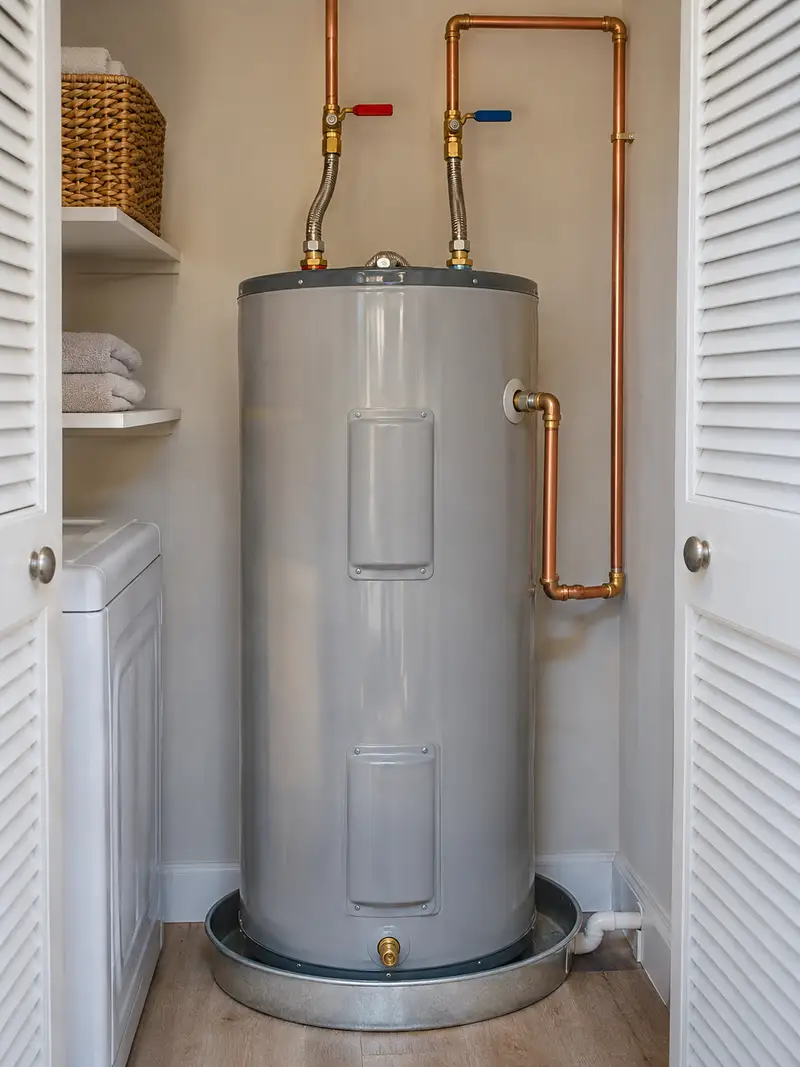
Close the water heater valve
Open the main water valve again but keep the cold water valve on the water heater closed. If the meter now stays still, the leak is probably on a hot water pipe.
Walk the floors barefoot
Walk slowly over tile and concrete floors and feel for warm spots.
Write down each reading and the time. Your notes help the plumber go straight to the right pipe.
Is it a slab leak or something simpler?
Before you assume the worst, rule out the everyday causes. Several of them look like a slab leak.
| What you notice | It points to a slab leak if | It could also be |
|---|---|---|
| The water meter keeps moving | It keeps moving with the toilets and sprinklers off | A leaking toilet flapper or a sprinkler zone stuck on |
| Wet flooring | It is wet from below and keeps coming back | A dishwasher, a refrigerator water line or a shower pan |
| A warm spot on the floor | The spot stays warm at night | Afternoon sun or a heating duct under the floor |
| Higher water use | Use rises with no change in your routine | Watering the lawn in summer |
Do the food coloring test on each toilet and make sure the sprinklers are off before you assume there is a slab leak.
Is the slab leak on a hot or cold water pipe?
Leaks on a hot water pipe are usually noticed sooner, because they warm the floor and keep the water heater running. Leaks on a cold water pipe are harder to spot and often show up only as a water meter that never stops and, later, damp flooring.
- Warm flooring together with a water heater that rarely switches off points to a hot water pipe.
- A moving water meter with no warm spots suggests a cold water pipe.
- Closing the cold water valve on the water heater while watching the meter helps you tell which one it is.
How a slab leak is found and repaired
The goal is to find the exact spot of the leak before any concrete is opened.
Pressure tests
The hot and cold water lines are pressurized one at a time to see which one loses pressure.
Listening equipment
A sensitive microphone hears the hiss of water forcing its way out of a small hole.
Thermal camera
Shows warm or cool areas on the floor where water is spreading.
Moisture meter
Shows how far the moisture has spread into drywall and flooring.
Repair under the floor
- A small opening is made directly above the leak.
- Only the damaged piece of pipe is replaced.
- Best for a pipe that is otherwise in good condition.
Reroute the pipe
- A new pipe is run through the attic or walls.
- The pipe under the slab is no longer used.
- Best for a pipe that has already leaked before.
You see the test results and hear about both options before any work starts.
Slab leak signs you can see outside
Some signs show up outside the house. Soil that stays wet along the foundation, new cracks in the garage or patio slab and grass or shrubs by the house that turn greener than the rest of the yard are all worth noting. On their own they prove little, but together with a moving water meter they are a good reason to have a plumber check.
Why pipes under a slab leak
- Older copper pipe wearing thin because of minerals in the soil or the water.
- The ground under the house shrinking and swelling with moisture, which bends the pipe.
- Pipe rubbing against steel, gravel or the edge of the concrete each time it warms and cools.
- Water pressure that is too high, which strains every fitting under the floor.
When the same pipe under the slab has leaked twice, rerouting it through the attic or walls usually solves the problem for good.
How to limit slab leak damage until the repair
If you think you have a slab leak, a few simple steps limit the damage until it is found.
Read the water meter daily
Read it at the same time each morning so you can see how fast water is being lost.
Close the water heater valve
If you think the leak is on a hot water pipe, this slows the leak.
Lift wet flooring
Lift rugs and pull back damp carpet so the floor can dry.
Run fans
Fans pointed at damp areas help them dry and slow down mildew.
Close the main water valve overnight
When water is seeping up through the floor, shut the valve overnight while everyone sleeps.
Take dated photos
Photograph damp spots, cracks and meter readings, with the date.
What to check after a slab leak repair
After the repair, do the water meter check again. With all the water off, the meter should not move at all. Repeat the check a few days later and again after a month, in case there is a second leak.
- Let damp flooring dry out completely before laying anything back down.
- Compare your water use next month with the month before.
- Keep a note of where the leak was and how it was fixed.
- Ask for a water pressure reading, because high pressure wears out pipes under the slab faster.
Slab leak questions
Which slab leak symptoms usually show up first?
For most people, the first signs are a warm spot on the floor, a faint sound of running water when the house is quiet and a water meter that will not stop.
How quickly does a slab leak need fixing?
Water coming up through the floor needs attention straight away. A leak that only shows on the water meter still needs fixing within days, not months.
Can I find a slab leak myself?
The water meter check confirms that water is leaking, but finding the exact spot under concrete needs pressure tests and listening equipment.
Will my floor have to be torn up?
A repair under the floor needs only a small opening above the leak. Rerouting the pipe leaves the slab alone completely.
Can a slab leak cause mold?
It can, when water soaks into carpet pad, baseboards or drywall. A musty smell near the floor should be checked.
Can newer houses get slab leaks?
Yes, although slab leaks are much more common in older homes with copper pipe under the floor.
Can a slab leak damage my foundation?
Water leaking under the slab day after day can soften or shift the soil beneath it, which is a good reason to repair it quickly.
Does homeowners insurance cover a slab leak?
It depends on your policy. Some policies cover opening the floor or the water damage but not the pipe itself, so ask your agent.
Can we stay at home during a slab leak repair?
In almost every case, yes. If water is coming up through tile or carpet, wipe it up as it appears and use as little water as possible until the repair is done.
How much water does a slab leak waste?
Anything from a slow trickle to a steady stream, and even a small leak runs all day and night.
What should I do before the leak detection visit?
Read the water meter daily, use only the water you need and mark any warm or damp spots with tape.
Why did I get another slab leak after the first was fixed?
When old pipe fails in one place, other weak spots on the same pipe often fail soon after. Repeated leaks usually mean rerouting the pipe is the better option.
Will a slab leak stop by itself?
No. A water pipe under pressure keeps leaking until it is repaired, even if the signs seem to fade for a while.
Is a slab leak a foundation problem?
No. It is a plumbing leak under the floor. If it is not repaired, it can affect the soil under the slab, which is why a quick repair matters.
Can you hear a slab leak?
Sometimes. Late at night with every faucet off, a soft hissing sound under the floor or behind a wall is a common sign.
Can drain pipes under the slab leak too?
Yes. A cracked or separated drain pipe under the floor shows up as slow drains, a sewer smell or damp spots rather than a moving water meter.