Burst Pipe Repair in Lubbock, TX
If a pipe has burst in your home, turn off the water first and we can send a local plumber to repair it.
First steps after a burst pipe in Lubbock
The faster you stop the water, the less damage it does
Close the main water valve
It is usually on a garage wall, in the laundry closet or in a box near the front hose bib. A round handle turns clockwise until it will not go further, and a lever needs a quarter turn.
Turn off power to wet rooms
While standing on a dry floor, switch off the breakers for any wet room with outlets, lights or appliances.
Drain the pipes
Open the tub faucet or the lowest sink so the water left in the pipes drains there instead of through the crack.
Move your belongings
Lift rugs, cords, electronics and cardboard boxes off the floor.
Take photos
Photograph the broken pipe, each wet room and anything damaged before you start cleaning up.
If you cannot find the main water valve, or it will not turn, our guide on how to turn off the main water valve explains the curb stop in the meter box and the smaller shutoff valves at each fixture.
Why water pipes burst
Freezing is the most common cause, but not the only one
A burst pipe in Lubbock is very often the result of a pipe freezing during a cold snap. Water expands as it freezes, pressure rises in the trapped water between the ice and the faucet, and the weakest point in the pipe splits. Pipes in outside walls, attics and garages are most at risk.
The ice often keeps the crack sealed while the pipe is frozen. That is why the leak usually starts later in the day, once the pipe thaws, rather than during the coldest part of the night.
Where to look for a burst pipe you cannot see
A broken pipe does not always spray where you can see it
Outside walls
Bubbling paint, a damp baseboard or a dark line just above the carpet.
The attic
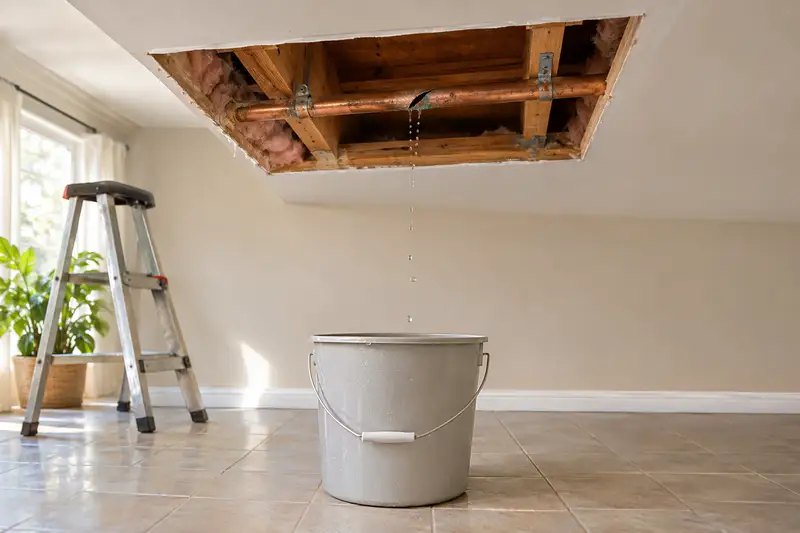
A ceiling stain that spreads after a freeze, or water dripping from a light fixture.
Garage walls
A puddle where the water pipe enters the house.
Under sinks
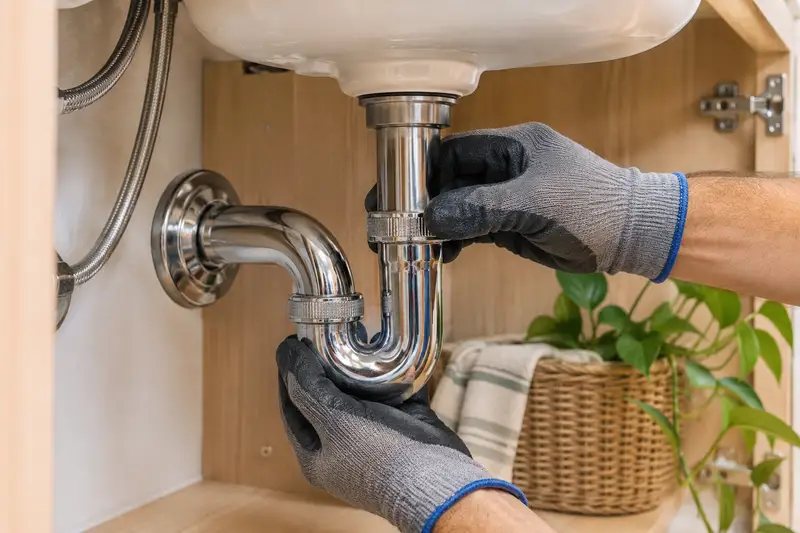
A warped cabinet floor and a musty smell when you open the doors.
Under the slab
A warm spot on the floor, a faint sound of running water or a water meter that never stops.
Behind an outdoor faucet
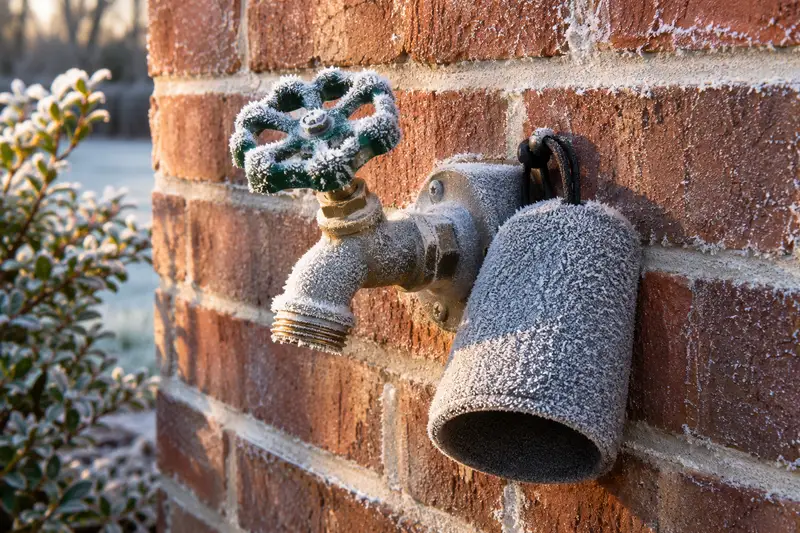
Water running down the brick only while the hose bib is turned on.
If you think there is a leak but cannot find it, our leak detection page explains how plumbers locate it without cutting holes at random.
How a burst pipe repair is done
Repairing a burst pipe in Lubbock follows similar steps every time. The details depend on where the pipe cracked, what it is made of and how hard it is to get to. A split pipe on an open garage wall is quick to fix. One above a finished ceiling takes more care to reach and patch neatly.
Find the break
Sometimes the crack is easy to see. Other times the plumber traces the water back through a wall or ceiling to where it started.
Open a small access hole
A tidy square of drywall comes out, which gives access to the pipe and lets the wall dry.
Replace the damaged section
The cracked piece is cut out and new pipe and fittings that match your plumbing are put in.
Test the repair
The water is turned back on slowly while the plumber checks the new joints and the old ones next to them.
Nothing is cut until you know what failed and what the repair involves. If the pipe next to the break looks likely to fail soon, the plumber tells you that too and explains what a larger repair would mean.
How different types of pipe fail
| Pipe material | How it usually fails | Usual repair |
|---|---|---|
| Copper | Splits lengthwise when it freezes, or develops pinhole leaks with age | A new copper section soldered or pressed in |
| PEX | Stretches instead of splitting, but a fitting or crimp ring can leak | A new fitting or a short new section |
| Galvanized steel | Rust builds up inside until the pipe leaks or chokes the flow | A new section, and often a discussion about repiping |
| CPVC | Becomes brittle with age and can crack if it is knocked or bent | Cutting out and replacing the cracked section |
If several sections have failed, or your water comes out brown, ask whether replacing the pipes makes more sense than repairing them one at a time.
Temporary burst pipe fixes until the repair
Sometimes a full repair has to wait until a part arrives or until morning. These are the safe ways to get through the night, and the things to avoid.
Safe temporary fixes
- Closing a shutoff valve that only serves that part of the house.
- A bolt on pipe repair clamp over a short split.
- Silicone repair tape wrapped tightly around a pinhole leak.
- Keeping the main water valve closed overnight and using bottled water.
Things to avoid
- Duct tape or plastic wrap over the crack.
- Heating a frozen pipe with a torch or lighter.
- Turning the main water valve back on just to test it.
- Closing up the drywall before the wall has dried.
A clamp or tape will hold until morning. It is only temporary, so have the damaged section replaced properly.
Electrical safety after a burst pipe
The biggest danger after a pipe bursts is water reaching electrical wiring. Stay away from each of these until the power to that area is off.
Water dripping from a light
Switch off that breaker and do not touch the wall switch.
A sagging ceiling
Leave the room. A ceiling full of water can collapse suddenly.
Wet outlets or cords
Keep them unplugged, with the breaker off, until they have dried out and been checked.
Water near the breaker box
Keep your distance and mention it on the phone.
Recording the damage for your insurance company
A few notes now can help with a claim later
After a burst pipe in Lubbock, many homeowners contact their insurance company the same day. Coverage varies by policy, and most insurers handle a sudden break differently from a leak that dripped for weeks.
- Photograph the crack before the damaged section is cut out, and ask to keep the old piece of pipe.
- Photograph each wet room, the ceiling below and every damaged item.
- Note the time you found the water and everything you did next.
- Keep the repair paperwork and any written note about the cause.
- Ask whether moisture readings would help if your walls or floors got wet.
Most policies also expect you to take reasonable steps to limit the damage, which is another reason to close the main water valve straight away.
Drying your home after the pipe is repaired
The new pipe stops more water from leaking, but the water already in the drywall, insulation and subfloor still has to dry. Inside a closed wall, that moisture can stay for days.
- Leave the access hole open until the inside of the wall looks and smells dry.
- Keep fans and a dehumidifier running in that room for a few days.
- Lift wet rugs and pull back the carpet if the pad got soaked.
- Watch for a musty smell over the next week, which means moisture is still trapped.
- Keep the repair paperwork and your photos together for your insurance company.
If a lot of flooring got wet, or water dripped into the room below, plan for a water damage drying company to work alongside the plumber.
How to prevent burst pipes in the next freeze
Most burst pipes in Lubbock can be prevented with a few simple steps when a freeze is forecast. None of them take long, and together they protect the usual weak spots in a Lubbock home, from the garage wall to the attic.
Before a hard freeze
Remove hoses, cover the outdoor faucets and leave the heating running even while you travel.
On very cold nights
Open the cabinets under sinks against outside walls and leave a faucet dripping slowly.
Every fall
Test the main water valve and look for green buildup on fittings under sinks.
A pipe that froze before
Insulate it, block the draft or have the pipe moved to a warmer wall.
Our guide on how to keep pipes from freezing covers cold weather preparation room by room, with a short list for the night a hard freeze is forecast and another for the week after.
Burst pipe questions
What is the first thing to do after a pipe bursts?
Shut the main water valve. Next, from a dry spot, turn off power to any wet rooms, let the lowest faucet run to empty the pipes and lift belongings off the floor.
Why did the water only appear once it warmed up?
The pipe most likely cracked while it was frozen overnight. The ice kept the crack sealed until it melted.
Can I have water in the rest of the house before the repair?
Sometimes. If a shutoff valve or a cap can isolate the broken pipe, the water to the rest of the house can be turned back on while the repair is planned.
Does the drywall have to be cut open?
Usually only a small access hole, both to reach the pipe and to let the wall dry. It is patched once everything has dried.
Will insurance cover a burst pipe?
That depends on the wording of your policy, since insurers usually separate a sudden break from a long slow leak. Ask your agent, and keep every photo and note.
How do I find a burst pipe I cannot see?
Look for stains, soft drywall and the sound of running water. A plumber can confirm the location with a moisture meter or a thermal camera.
Should I turn off the water heater?
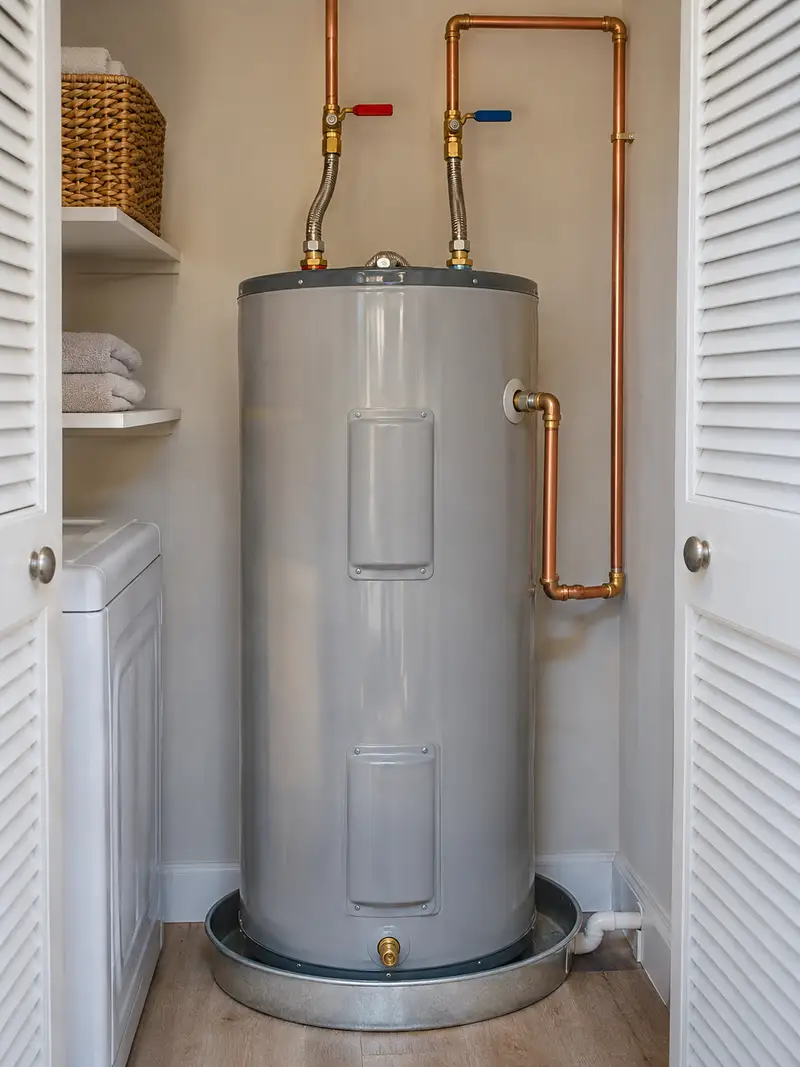
When the main water valve has to stay closed for hours, switch the water heater to vacation or pilot so it is not heating without a water supply.
Can a burst pipe lead to mold?
Yes, when drywall or flooring is still wet after a day or two. Drying everything quickly after the repair is the best protection.
Why does the same pipe keep freezing?
It runs through a cold part of the house, such as an outside wall or an unheated garage. Insulating it or moving it solves the problem.
The leak stopped. Is the pipe still broken?
Yes. Closing the valve only stopped the water. The crack starts leaking again the moment water pressure returns.
How quickly can a burst pipe be repaired?
A crack in an open garage wall can often be fixed within an hour. A pipe above a finished ceiling means opening the ceiling, replacing the pipe and coming back to patch it once it dries.
Can I repair a burst pipe myself?
A clamp or silicone tape can hold a small split overnight, but the cracked section still needs replacing. A permanent repair should be done by a plumber.
What if the burst pipe is outside?
A break on the yard side of the main water valve needs the curb stop in the meter box closed. A break inside the house only needs the main water valve closed. Outdoor pipes and faucets often crack in cold snaps.
Will I need a water damage company as well?
When water has soaked walls, ceilings or floors, a water damage company brings fans, dehumidifiers and moisture meters to dry the house faster and record the readings.
Why do pipes in the garage burst so often?
Most garages are not heated, so the pipes along their walls get very cold in a freeze. Insulating those pipes and keeping the garage door closed on cold nights helps a lot.
Can a burst pipe damage the slab?
A burst pipe above the floor rarely damages the slab itself, but standing water can soak under flooring and baseboards. Drying it quickly protects both.
Other leak and water line repairs
- Emergency PlumbingPlumbing problems that cannot wait
- Leak DetectionHidden leaks in walls, floors and slabs
- Water Line RepairThe buried pipe from the meter to the house
- All plumbing repairsEvery repair we handle, grouped by problem
Whether the pipe broke in the attic, the garage or under a sink, homeowners with a burst pipe in Lubbock, TX can contact Plumber Lubbock TX for the repair.